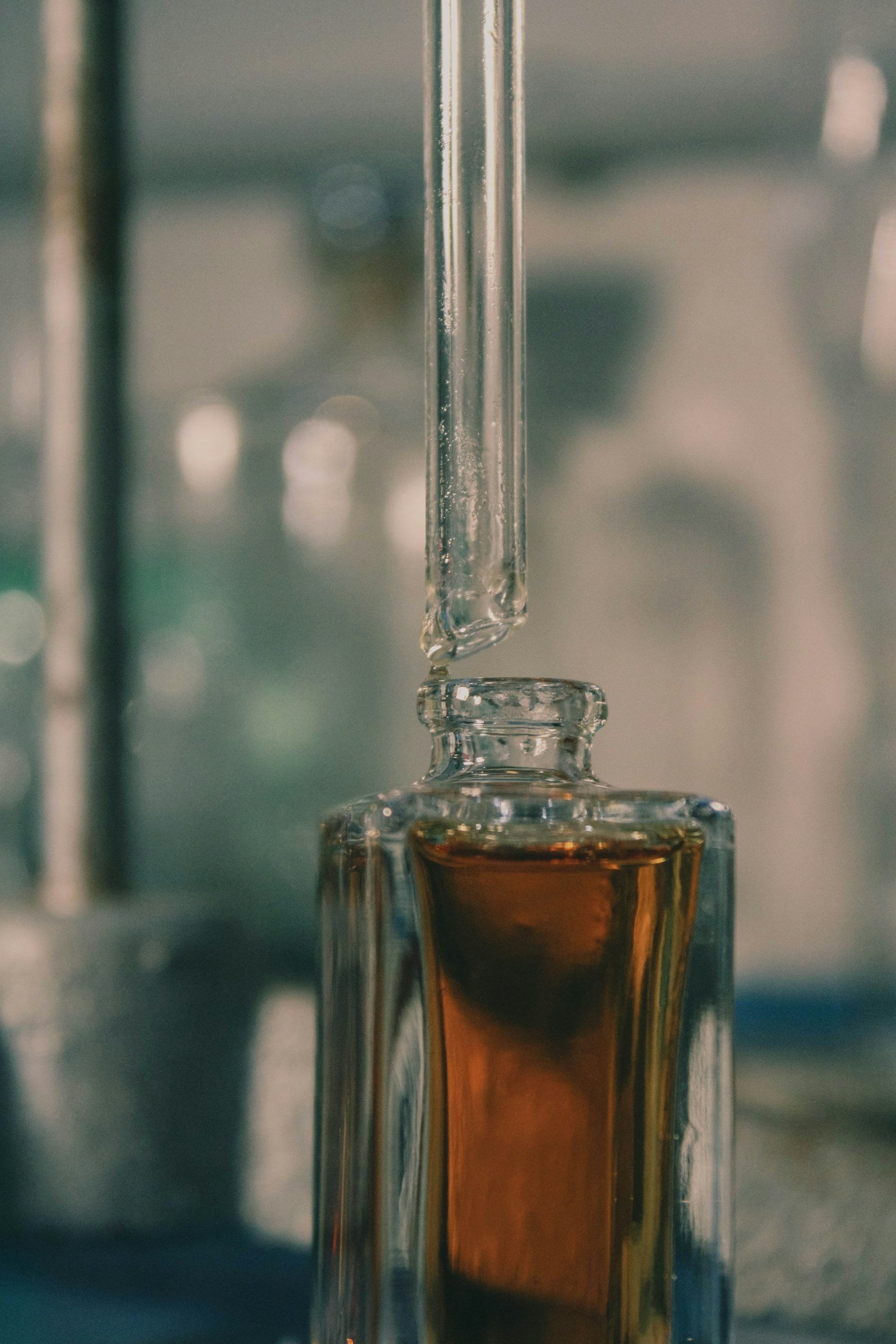
Natural and synthetic describe how fragrance materials are obtained, rather than two levels of perfume quality. A useful starting point is to ask what you want the finished scent to feel like, then discuss any ingredient preferences with the perfumer. Neither label, on its own, tells you whether you will enjoy the perfume.
What is the difference?
Natural fragrance materials come from sources such as flowers, woods, resins and citrus peel. Their aromatic material can be captured by methods including distillation or extraction. Synthetic fragrance materials are made through chemical processes and give perfumers another set of tools for building a composition.
IFRA describes modern fragrance creation as a combination of natural materials, synthetic molecules and the perfumer’s creative work. Its overview explains that synthetic materials can extend natural impressions or recreate notes that would otherwise be difficult to obtain. This does not mean every synthetic material has the same purpose or origin.
| Term | What it helps describe | What it does not establish |
|---|---|---|
| Natural material | A material obtained from a natural source. | That you will prefer the finished perfume. |
| Synthetic material | A material produced through synthesis. | That the perfume will smell harsh or artificial to you. |
A note description is not a complete recipe
When a fragrance is described as floral, woody or fresh, you are being given a way to imagine its character. Do not use that description as proof of exactly which raw materials are inside. If the origin of an ingredient matters to your purchase, ask a specific question rather than making an assumption from the name of a note.
For example, “I want a soft rose impression” describes a sensory preference. “I would like to discuss which rose-derived materials are used” is a separate question about the formula. Both can be useful; they simply ask for different information.
Why “natural” is not a complete answer
IFRA cautions that a natural origin does not automatically make an ingredient safer than a synthetic one. It also explains that essential oils and synthetic fragrance materials are both made of chemical compounds. An ingredient’s origin is not a substitute for assessing how it is used.
This is a reason to ask clear questions, rather than to choose a product on a single reassuring word. It is not a guarantee about an individual formula or a recommendation for someone with a particular sensitivity.
Questions worth taking to a perfumer
- Which part matters to me? The scent itself, the origin of particular ingredients, a sourcing preference, or something else?
- What do I want to smell? Describe the feeling you want before specifying a list of materials.
- What information can the maker provide? Ask about the finished product rather than relying on general statements about an entire category.
- Does my brief change the quote? Discuss any unusual or costly ingredient requests before work begins.
At OZORNINA, a bespoke commission begins with a consultation, followed by two initial samples and one refinement of the chosen sample. Any extra cost for rare or costly ingredients is discussed before work starts. The Shop describes the current experience and bottle options.
If you would like to explore fragrance materials in a group, see perfume workshop dates in Northampton. The current listing shows the location, price and available places for each session.
Quick answers
Does synthetic mean low quality?
No. The word describes how a material is made; it is not a rating of how well a composition has been created.
Does natural mean chemical-free?
No. Natural aromatic materials are also made of chemical compounds.
Is OZORNINA described here as an all-natural perfume brand?
No. This guide explains terminology. Ask the atelier about a particular brief and the information available for your finished product.
Sources: IFRA: How is fragrance made? and IFRA: Questions about fragrance. The consultation checklist is OZORNINA editorial guidance.